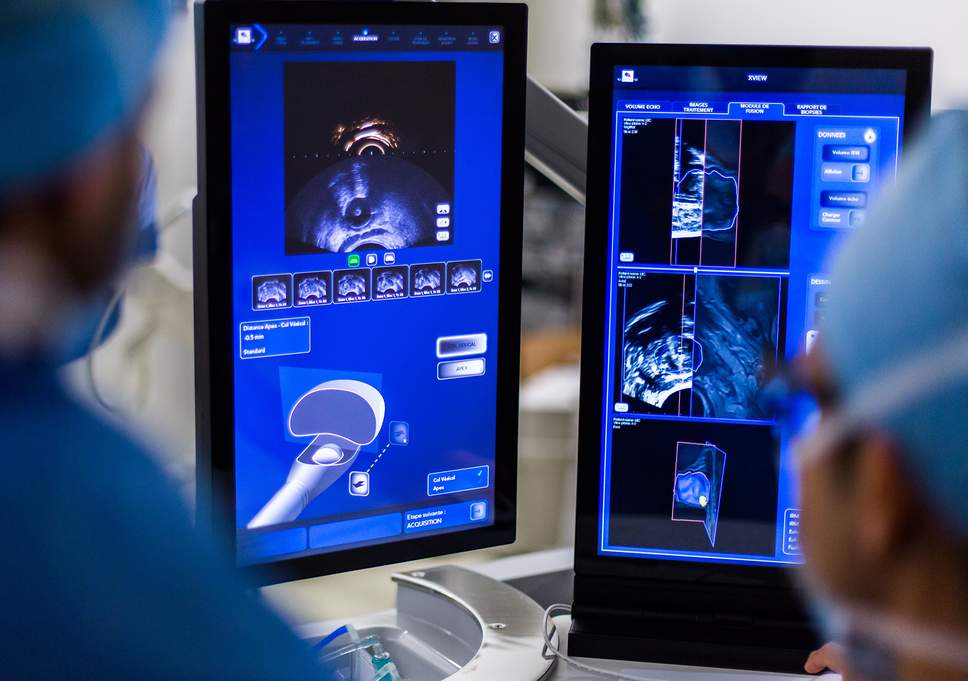
Prostate Cancer Screening & Treatment
The term “cancer” refers to a condition in which cells accumulate uncontrollably—the ability to regulate cell growth or death is lost. So instead of dying as they should, prostate cancer cells live longer than normal cells and form masses of abnormal cells known as tumors. Primary tumors are the original tumors; secondary tumors occur if [...]
Read More
Are Prostate Cancer Deaths On The Rise?
No, prostate cancer deaths continue to decline among all men, according to the American Cancer Society. Treatment for both localized, and advanced, prostate cancer has continued to improve. Treatments In fact, in the past 10 years, at least six new treatments have become available and commonly used for patients with advanced prostate cancer, and more [...]
Read More
Is prostate cancer slow growing?
This year, more than 300,000 American men will be diagnosed with prostate cancer. In most cases, the cancer consists of small knots of abnormal cells growing slowly in the walnut-sized prostate gland. In many men, the cancer cells grow so slowly that they never break free of the gland, spread to distant sites, and pose [...]
Read More
Prostate Cancer Clinical Trials Omaha
UroHealth Partners has many cancer clinical trials in Omaha aimed at finding treatments for urinary disorders, including prostatitis and BPH. The Medical Therapy of Prostate Symptoms (MTOPS) program is studying the results of medical therapy used to treat thousands of men with BPH in several research centers throughout the country. MTOPS will provide valuable information […]
Read More
What Are Prostate Problems?
For men under 50, the most common prostate problem is prostatitis. For men over 50, the most common prostate problem is prostate enlargement. This condition is also called benign prostatic hyperplasia (BPH). Older men are at risk for prostate cancer as well, but this disease is much less common than BPH. Learning about these urological […]
Read More